Best Kitchen Blinds 2026: Top Picks & Buying Guide
Best Blinds for Kitchen: Complete Guide & Top Picks 2024
Choosing the right blinds for kitchen windows requires careful consideration of moisture resistance, light control, and easy maintenance. Kitchen blinds must withstand humidity levels up to 60%, grease splatter, and frequent temperature changes while providing privacy and style. The best options include faux wood blinds, aluminum mini blinds, vinyl vertical blinds, and moisture-resistant cellular shades. Unlike natural wood blinds, these materials won't warp or discolor from steam and cooking vapors, making them ideal for busy kitchen environments.
Why Kitchen Blinds Need Special Consideration
Kitchens present unique challenges for window treatments that other rooms don't face. The combination of heat, moisture, grease, and frequent activity means your blinds need to be both functional and durable.
Moisture and Humidity Challenges
Kitchens experience humidity spikes of 40-60% during cooking, compared to the ideal home humidity level of 30-50%. This excess moisture can cause natural materials like wood to warp, crack, or develop mold. Steam from boiling water, dishwashers, and hot beverages creates condensation that can damage sensitive materials.
Grease and Food Particles
Cooking generates airborne grease particles that settle on surfaces within a 6-foot radius of stovetops. These particles attract dust and create a sticky film that's difficult to remove from textured surfaces. Your kitchen blinds need smooth, non-porous materials that can be easily wiped clean.
Light and Privacy Requirements
Kitchens often require flexible light control throughout the day. Morning meal preparation benefits from natural light, while evening cooking may need glare reduction. Additionally, 73% of homeowners want privacy while cooking, especially for ground-floor or close-neighbor situations.
Top Types of Blinds for Kitchen Windows
Faux Wood Blinds: The Perfect Balance
Faux wood blinds offer the elegant appearance of real wood with superior moisture resistance. Made from PVC or composite materials, these blinds can withstand humidity levels up to 70% without warping.
Key Benefits:
- 100% moisture resistant
- Easy to clean with damp cloth
- Available in 1-inch, 2-inch, and 2.5-inch slat widths
- Cost 30-40% less than real wood
- Won't fade from UV exposure
Best Applications:
- Windows above kitchen sinks
- East or west-facing windows with direct sunlight
- Open-concept kitchen-dining areas
Faux wood blinds work exceptionally well in traditional and transitional kitchen designs. The 2-inch slat width provides optimal light control while maintaining easy maintenance.
Aluminum Mini Blinds: Budget-Friendly Durability
Aluminum mini blinds remain a popular choice for kitchen windows due to their affordability and practicality. These blinds cost 50-70% less than faux wood options while offering excellent moisture resistance.
Advantages:
- Completely waterproof
- Lightweight and easy to operate
- Available in 30+ color options
- Slats can be removed for deep cleaning
- Lifespan of 8-12 years with proper care
Considerations:
- Can dent or bend with rough handling
- May create glare in bright sunlight
- Less insulation value than other options
For budget-conscious homeowners, aluminum mini blinds provide reliable performance at $15-40 per window, depending on size.
Cellular Shades: Energy Efficiency Meets Style
Cellular shades, also known as honeycomb shades, offer superior insulation properties that can reduce kitchen energy costs by up to 15%. The cellular construction traps air, providing thermal barrier protection.
Performance Features:
- R-values ranging from 2.0 to 5.0 (double and triple cell)
- Moisture-resistant fabric options available
- Light filtering and blackout opacities
- Cordless operation for safety
- Top-down/bottom-up functionality
Choose moisture-resistant cellular shades specifically designed for high-humidity areas. These typically feature synthetic fabrics with antimicrobial treatments.
Roller Shades: Modern Minimalism
Roller shades provide clean lines and unobstructed views when raised. Modern roller shades come in moisture-resistant vinyl, polyester, and specialty kitchen fabrics.
Style Options:
- Light filtering: 5-15% openness factor
- Room darkening: 95-99% light blockage
- Solar shades: UV protection with view-through capability
- Printed patterns and textures available
Roller shades work particularly well in contemporary and modern kitchen designs. The streamlined appearance complements stainless steel appliances and clean cabinet lines.
Material Considerations for Kitchen Environments
Moisture-Resistant Materials
PVC and Vinyl: Completely waterproof materials that can be submerged and cleaned without damage. Ideal for windows directly above sinks or dishwashers.
Aluminum: Non-corrosive metal that resists rust and discoloration. Can handle direct water contact and aggressive cleaning solutions.
Synthetic Fabrics: Polyester and acrylic blends treated with moisture-resistant coatings. These materials resist mold, mildew, and staining.
Materials to Avoid
Natural Wood: Beautiful but prone to warping, cracking, and discoloration in humid environments. Absorption rates of 8-12% moisture can cause permanent damage.
Untreated Fabric: Natural fibers like cotton and linen absorb odors, grease, and moisture, leading to staining and bacterial growth.
Paper-Based Materials: Woven wood shades and bamboo blinds can deteriorate quickly in kitchen environments.
Size and Installation Guidelines
Measuring Kitchen Windows
Accurate measurements ensure proper fit and function. Kitchen windows often have unique dimensions due to backsplashes, countertops, and appliances.
Inside Mount Requirements:
- Minimum 2-inch depth for most blinds
- 3-inch depth recommended for cellular shades
- Account for window cranks and handles
- Measure width at top, middle, and bottom
Outside Mount Considerations:
- Extend 2-3 inches beyond window frame
- Clear any protruding trim or hardware
- Consider adjacent cabinets and appliances
Installation Tips for Kitchen Blinds
- Pre-installation Cleaning: Remove all grease and debris from window frames before installation
- Moisture Barriers: Use caulk to seal gaps that might allow moisture behind blinds
- Hardware Selection: Choose rust-resistant brackets and screws
- Clearance Checks: Ensure blinds don't interfere with faucet operation or cabinet doors
When you're ready to measure and order, you can shop custom blinds at SmartBlindsPro.com for precise sizing and professional-grade materials.
Cleaning and Maintenance Best Practices
Daily Maintenance
Quick Wipe-Down: Use microfiber cloths to remove surface dust and light grease daily. This prevents buildup that becomes harder to clean later.
Spot Cleaning: Address spills and splatters immediately with mild soap solution. Grease becomes more difficult to remove as it oxidizes and hardens.
Weekly Deep Cleaning
Slat-by-Slat Cleaning:
- Close blinds completely
- Use vacuum brush attachment on low setting
- Wipe each slat with damp microfiber cloth
- Reverse blind direction and repeat
Fabric Shade Maintenance:
- Vacuum with upholstery brush weekly
- Use fabric-safe spot cleaners for stains
- Professional cleaning every 2-3 years for cellular shades
Monthly Deep Cleaning
For heavily used kitchen blinds, monthly deep cleaning extends lifespan and maintains appearance:
Removable Slat Method:
- Remove individual slats (aluminum and some faux wood)
- Soak in bathtub with mild detergent
- Scrub gently with soft brush
- Rinse thoroughly and air dry
- Reassemble when completely dry
In-Place Deep Cleaning:
- Use blind cleaning tools or tongs with microfiber cloths
- Work from top to bottom
- Use degreasing solution for stubborn buildup
- Rinse with clean water and dry immediately
Design Integration and Style Tips
Color Coordination
Choose blind colors that complement your kitchen's color palette while hiding inevitable staining:
Neutral Tones: Beige, taupe, and warm gray hide dust and light grease while matching most kitchen designs.
Bold Accents: Dark colors like espresso or navy can make dramatic statements but show dust more readily.
Pattern Considerations: Subtle patterns and textures camouflage minor stains better than solid colors.
Coordinating with Kitchen Elements
Cabinet Integration: Match or complement cabinet hardware finishes. Brushed nickel blind hardware pairs well with similar cabinet pulls.
Appliance Harmony: Stainless steel appliances work well with gray, white, or metallic blind finishes.
Countertop Coordination: Consider countertop patterns and colors when selecting blind materials and colors.
Specialty Kitchen Window Solutions
Bay Windows: Require individual blinds for each section or flexible treatments that accommodate angles.
Corner Sinks: Need shorter blinds that clear faucet operation while providing privacy.
Breakfast Nook: Benefit from top-down/bottom-up cellular shades for privacy and light control.
Energy Efficiency and Cost Savings
Thermal Performance Benefits
Quality kitchen blinds can reduce energy costs by managing heat gain and loss through windows:
Summer Cooling: Light-colored blinds reflect up to 80% of solar heat, reducing air conditioning loads by 10-15%.
Winter Insulation: Cellular shades provide R-values up to 5.0, reducing heat loss through single-pane windows by 40%.
Annual Savings: Homeowners typically save $50-150 annually on energy costs with proper window treatments.
Long-Term Investment Value
Quality kitchen blinds provide excellent return on investment:
Lifespan Comparison:
- Faux wood blinds: 10-15 years
- Aluminum mini blinds: 8-12 years
- Cellular shades: 8-12 years
- Roller shades: 5-10 years
Home Value Impact: Updated window treatments can increase home value by 2-4%, with kitchen improvements showing strong returns.
For premium options that maximize longevity and performance, browse our collection at SmartBlindsPro.com for professional-grade materials and expert installation services.
What Are Good Alternatives to Kitchen Blinds?
While blinds offer excellent functionality, several alternatives work well in kitchen environments:
Café Curtains
Café curtains cover only the bottom half of windows, providing privacy while allowing natural light. Choose machine-washable fabrics like cotton or polyester blends.
Roman Shades
Fabric roman shades offer soft styling with excellent light control. Select moisture-resistant fabrics and consider cordless operation for easy cleaning.
Shutters
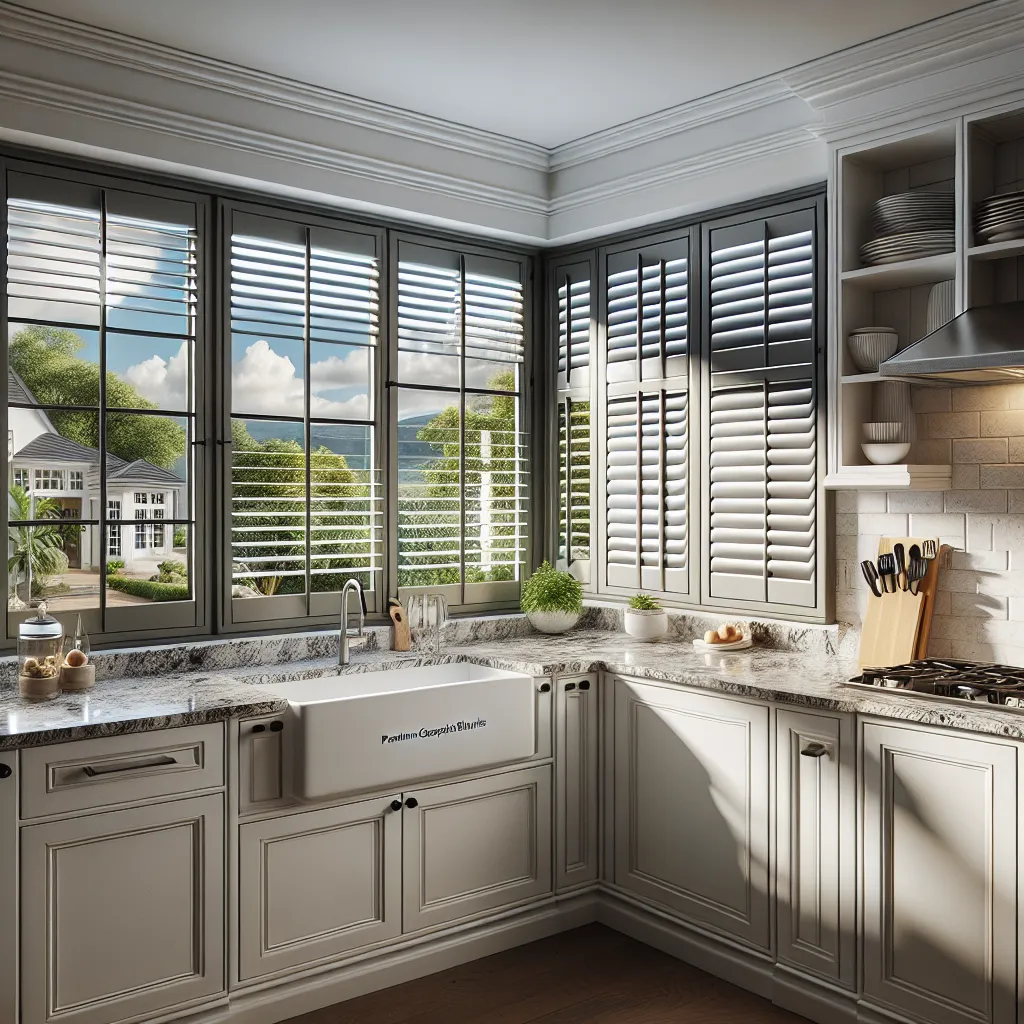
Plantation shutters provide excellent durability and moisture resistance. Composite materials work better than wood in kitchen environments.
Window Film
Decorative or privacy window film offers a permanent solution that requires minimal maintenance. Options include frosted, etched, and patterned designs.
Valances Only
For windows that don't require privacy, decorative valances add style without full coverage. Combine with sheer panels for soft light filtering.
You can also explore these alternatives at shadeandblinds.com for additional inspiration and options.
Smart Features and Modern Technology
Motorized Operation
Motorized blinds offer convenience and improved longevity by reducing manual wear:
Battery-Powered Systems: Install without electrical work, with batteries lasting 1-2 years depending on usage.
Hardwired Options: Provide permanent power for frequent operation and integration with home automation systems.
Smart Home Integration: Compatible with Alexa, Google Home, and smartphone apps for voice control and scheduling.
Cordless Safety Features
Cordless blinds eliminate strangulation hazards and provide cleaner appearance:
Spring-Loaded Systems: Allow easy raising and lowering with gentle pulls.
Continuous Cord Loops: Keep cords out of reach while maintaining easy operation.
Wand Controls: Provide precise slat adjustment without cords or chains.
Budget Considerations and Value Options
Cost Breakdown by Type
Aluminum Mini Blinds: $15-40 per window - Best budget option Faux Wood Blinds: $40-120 per window - Best value balance Cellular Shades: $60-180 per window - Best energy efficiency Roller Shades: $50-150 per window - Best modern aesthetics
Money-Saving Tips
- Measure Carefully: Accurate measurements prevent costly returns and re-orders
- Consider Standard Sizes: Custom sizes typically cost 20-30% more
- Bundle Orders: Many retailers offer discounts for multiple window orders
- Shop Off-Season: Fall and winter often have better pricing on window treatments
Professional vs. DIY Installation
DIY Installation Benefits:
- Save $50-100 per window in labor costs
- Complete project on your timeline
- Gain experience for future projects
Professional Installation Advantages:
- Guarantee of proper fit and function
- Warranty protection for installation issues
- Time savings (2-3 hours vs. 30 minutes per window)
Conclusion
Selecting the right blinds for kitchen windows requires balancing style, functionality, and durability. Faux wood blinds offer the best overall value for most kitchens, while aluminum mini blinds provide budget-friendly reliability. Cellular shades excel in energy efficiency, and roller shades deliver modern aesthetics.
The key factors for success include choosing moisture-resistant materials, maintaining proper cleaning routines, and selecting appropriate sizes and mounting options. With proper selection and care, quality kitchen blinds will provide 8-15 years of reliable service while enhancing your kitchen's appearance and functionality.
Ready to upgrade your windows? Shop premium custom blinds and shades at SmartBlindsPro.com for expert guidance, professional installation, and warranty protection on all products.